

Titanium Dioxide Spin Flash Drying Project
Project Overview
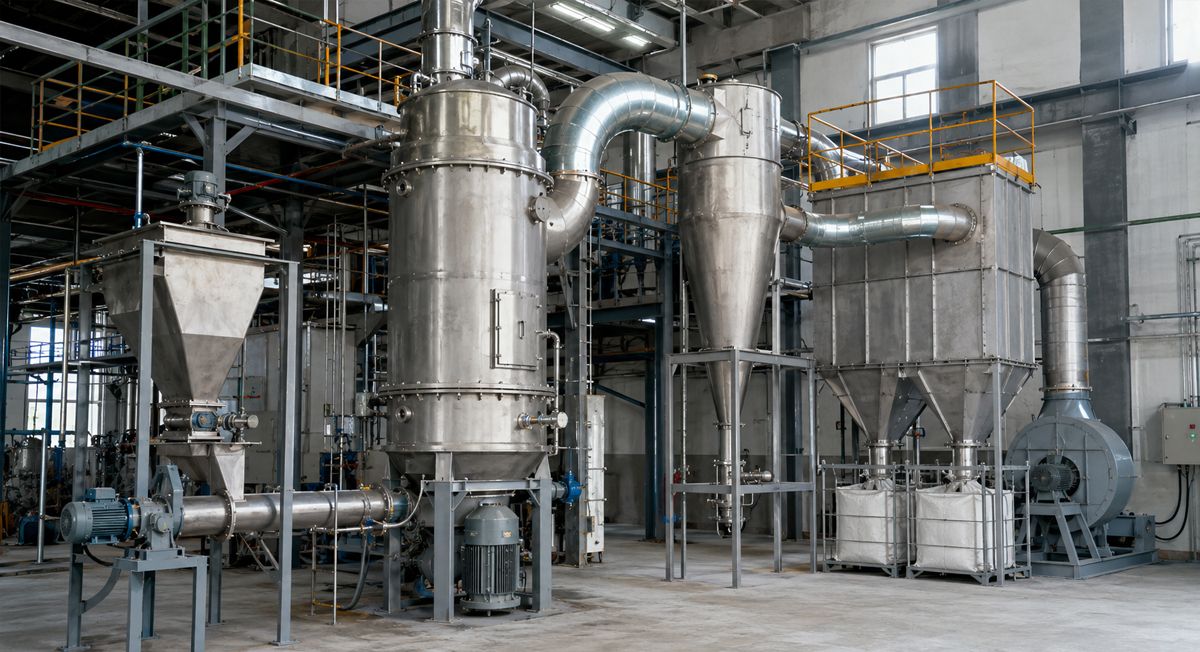
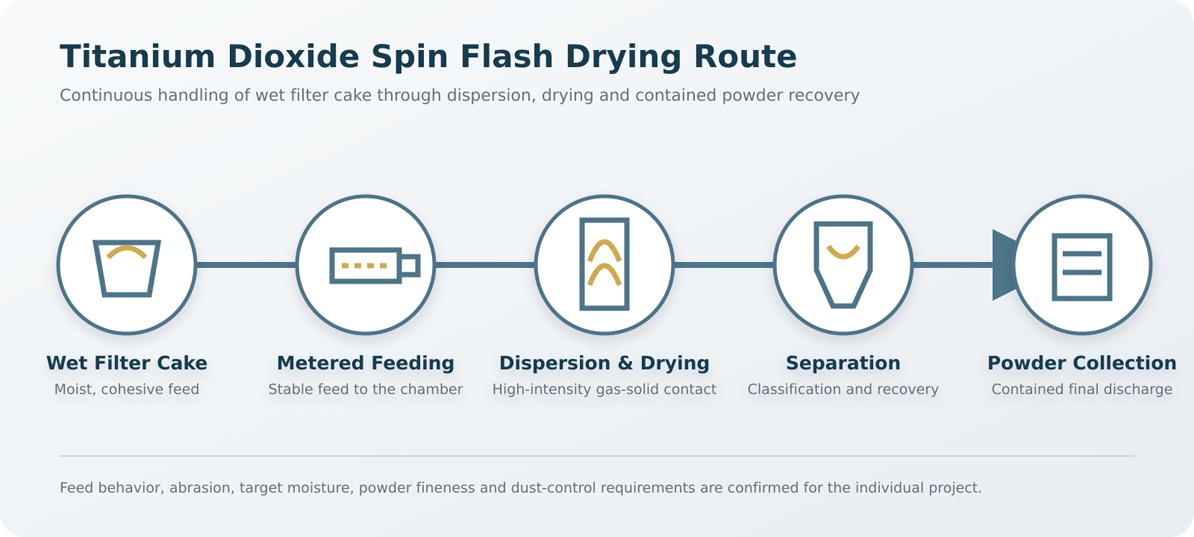
This representative fine-chemical project describes continuous drying of titanium dioxide wet filter cake using a spin flash drying system. The route integrates metered feeding, mechanical dispersion, rapid gas-solid contact, classification, powder separation and contained collection. The final design is determined from feed moisture, rheology, abrasiveness, required throughput, target moisture, particle requirements and dust-control conditions.
Challenge: Cohesive Wet Cake and Continuous Operation
Titanium dioxide filter cake can be cohesive and difficult to feed uniformly. If wet agglomerates are not dispersed effectively, drying may become uneven and deposits may form in the process path. The system must coordinate feed rate, disintegration intensity, air conditions and product separation while accounting for abrasion, powder containment and maintenance access.
Solution: Spin Flash Drying
The wet cake is introduced through a metered feeder into the lower section of the XSG spin flash dryer. A high-speed disintegrating mechanism disperses the feed in the hot-air stream, increasing the available surface area for moisture removal. Dried particles leave the chamber with the process gas and are recovered through the selected separation and filtration system; coarse or insufficiently dried material remains in the active drying zone until it reaches the required transport condition.
Engineering Focus
● Feed hopper, agitator and screw feeder selected around wet-cake consistency and bridging tendency.
● Disintegrator and air conditions coordinated to support dispersion and rapid moisture removal.
● Classifier, cyclone and filtration stages arranged around the required powder fineness and recovery duty.
● Wear protection, dust containment, access and cleaning provisions defined according to the material and site requirements.
Project Outcome
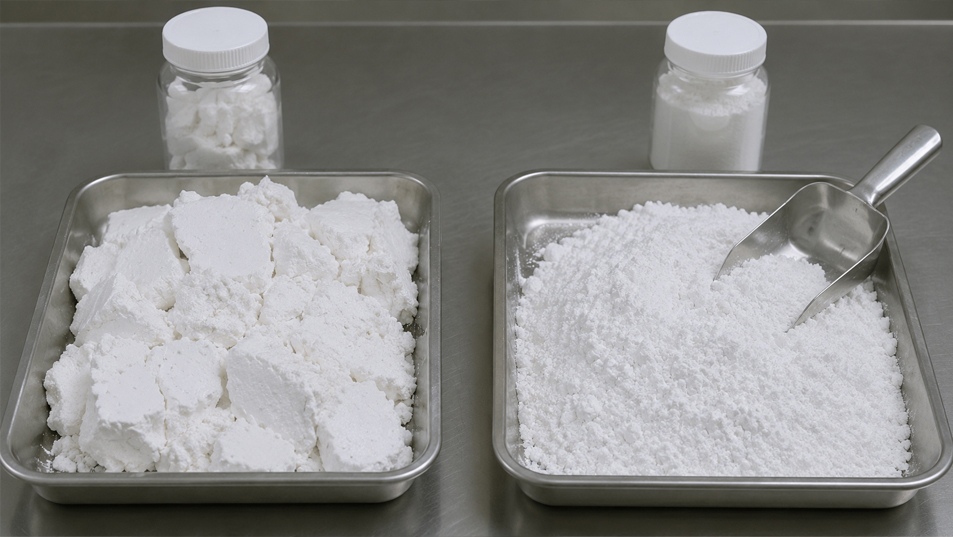
The configured process provides a continuous route for feeding, dispersing, drying and collecting a cohesive inorganic wet cake. Operating limits and acceptance criteria must be confirmed through material data, testing and commissioning. Published project results should be limited to recorded values for capacity, final moisture, product fineness, recovery and utility consumption.