

Non-Dairy Creamer Spray Drying Project
Project Overview
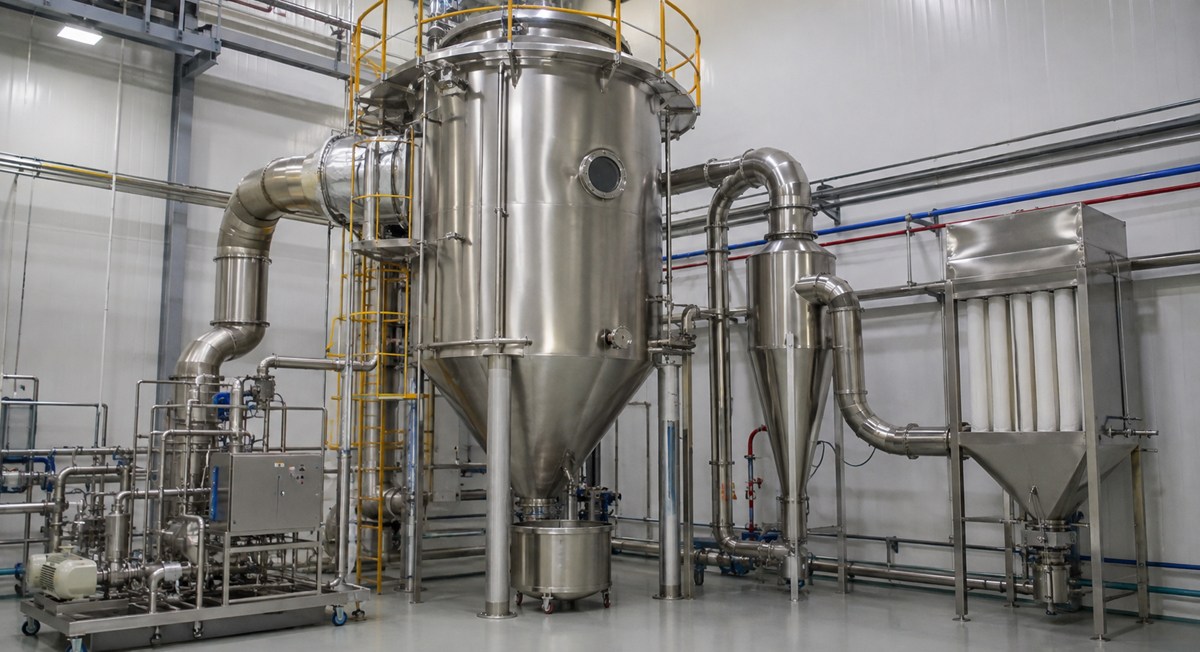
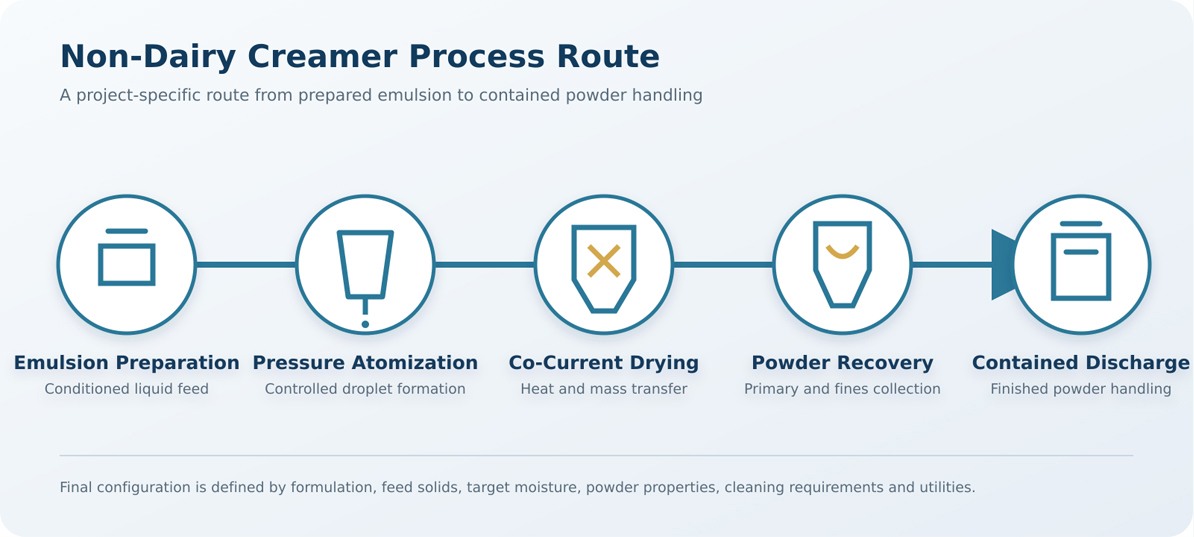
This representative food-ingredient project describes an integrated route for converting a prepared non-dairy creamer emulsion into a contained powder product. The line combines feed conditioning, pressure atomization, co-current drying, powder separation, fines recovery and controlled discharge. Final equipment selection is based on formulation, feed solids, required capacity, target moisture, powder properties, cleaning requirements and available utilities.
Challenge: Stable Feed and Controlled Particle Formation
Non-dairy creamer production begins with an emulsion whose stability and viscosity directly influence atomization. The drying system must maintain a consistent feed condition, form droplets within the required operating range, manage heat exposure and recover powder without uncontrolled carryover. Hygienic access, cleaning provisions and the interfaces between liquid preparation and powder handling must be defined as part of the complete process.
Solution: Pressure Spray Drying
The proposed route uses a high-pressure pump and pressure nozzle to atomize the conditioned emulsion at the top of a co-current drying chamber. Heated air contacts the droplets while moisture is removed, and the dried powder is separated through the primary discharge and fines-collection stages. The air system, powder recovery arrangement and process controls are configured around the product recipe and specified acceptance criteria.
Engineering Focus
● Feed preparation and holding conditions matched to emulsion stability and viscosity.
● Nozzle, pump pressure and drying conditions selected around the required droplet and powder characteristics.
● Primary powder discharge and fines recovery arranged to support controlled product collection.
● Product-contact materials, access and cleaning provisions defined for the food-processing environment.
● Instrumentation and control scope established from the agreed process limits and operating sequence.
Project Outcome
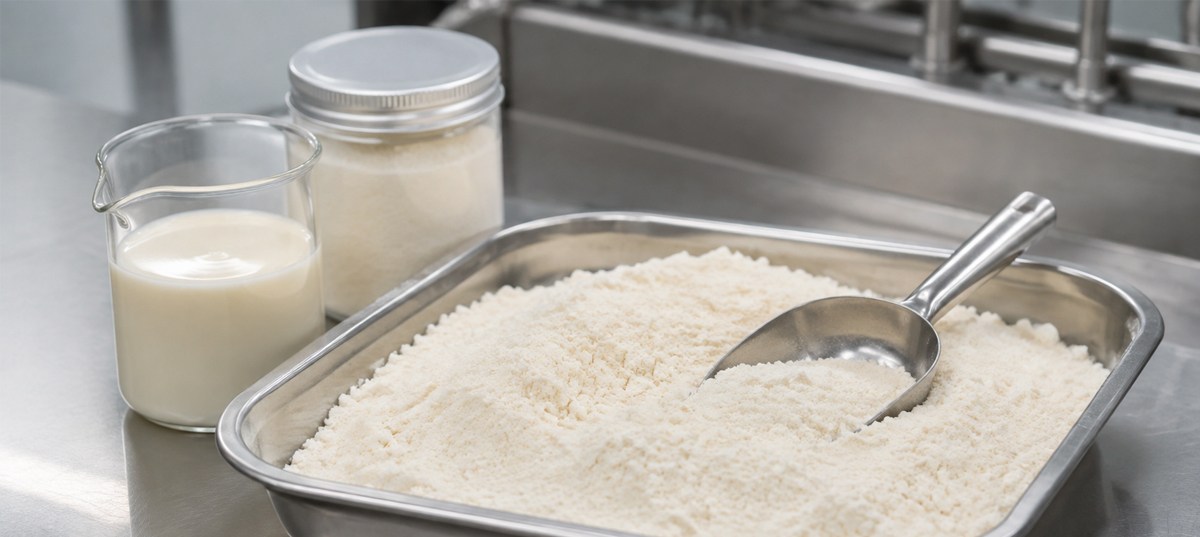
The integrated configuration establishes a defined path from prepared emulsion to sealed powder collection, with the drying and recovery stages coordinated as one system. Project acceptance should be based on agreed criteria such as throughput, final moisture, bulk density, reconstitution behavior, recovery performance and cleaning verification. Numerical results are published only when supported by the corresponding project records.