



Spray Drying in Pharmaceutical Industry: From Basics to Capacity and Efficiency
Spray Drying in Pharmaceutical Industry: From Basics to Capacity and Efficiency
Spray drying has become one of the most important powder-forming technologies in modern pharmaceutical manufacturing. Instead of drying a wet cake, slab, or granule batch by batch, a pharmaceutical spray dryer converts liquid feed—solutions, suspensions, emulsions, extracts, or pumpable pastes—into uniform dry powder in a single continuous operation.
For API producers, herbal-extract manufacturers, vaccine developers, and nutraceutical brands, spray drying is no longer just a “drying method.” It is a particle-engineering platform that influences solubility, stability, bulk density, flowability, and even lung deposition performance.
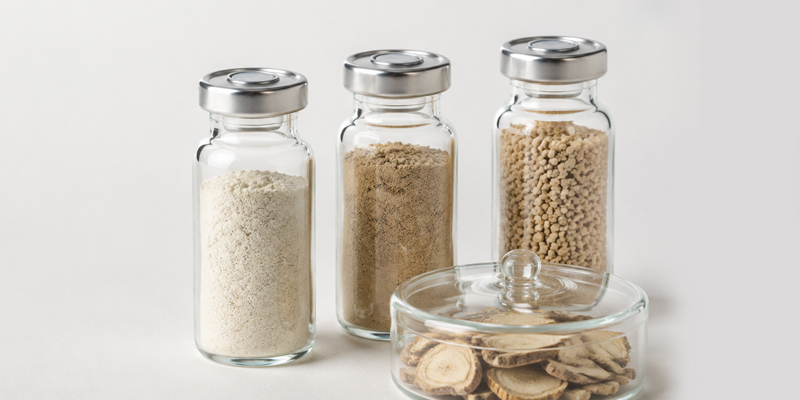
YIBU’s pharmaceutical-range machines—LPG centrifugal spray dryers, YPG herbal-extract spray dryers, closed-loop/nitrogen spray dryers, aseptic spray dryers, and spray drying granulators—are built around this reality: the dryer is part of the formulation system, not just the end of it.
Basics of Spray Drying
The basics of spray drying are simple to describe but difficult to master. A liquid feed is pumped into the machine, atomized into millions of tiny droplets, exposed to heated air or inert gas, and converted into solid particles within seconds.
Particle size: tens of microns for general powders; 1–5 µm for inhalable fractions
Particle morphology: spherical, porous, dense, agglomerated, or amorphous
Moisture/residual solvent: often 1–5% moisture or very low residual solvent
Bioavailability: poorly soluble APIs can become amorphous solid dispersions
Process safety: solvent-based or oxygen-sensitive formulations run in closed-loop nitrogen systems
That is why spray drying appears in antibiotic powder production, TCM extract drying, probiotic stabilization, peptide and vaccine powder processing, DPI formulations, and microencapsulation of sensitive actives.
Spray Dryer Working Principle
1. Feed preparation
The liquid is filtered, de-aerated if needed, and adjusted for viscosity and solids content. In pharma, feed hygiene, API concentration, excipient type, and solvent composition are validated before production.
2. Atomization
The feed is forced through a rotary disc, pressure nozzle, two-fluid nozzle, or ultrasonic atomizer. Atomization is the heart of the process because droplet size decides drying rate and final particle size.
3. Drying and particle formation
Droplets enter the drying chamber and meet hot air or nitrogen. In co-current designs, droplets see the highest temperature briefly but remain near the wet-bulb temperature until surface moisture disappears. This short residence time protects heat-sensitive APIs, enzymes, and herbal actives.
4. Powder recovery and exhaust treatment
Dried particles are separated by cyclone separators, bag filters, or wet scrubbers. Exhaust gas passes through filtration or condensation systems, especially when organic solvents or toxic vapors must be captured.
Parts of Spray Dryer
Feed pump / dosing system: peristaltic, mono, or high-pressure pump
Atomizer: rotary disc, pressure nozzle, two-fluid nozzle, ultrasonic system
Air handling unit: pre-filter, HEPA filter, heater, air distributor
Drying chamber: cylindrical/conical vessel designed to avoid wall sticking
Powder collection system: single/multi-stage cyclones, bag filters, wet collectors
Exhaust system: fan, ducting, scrubber, condenser, solvent-recovery loop
Control system: PLC/HMI with recipe management, alarms, data logging
Safety systems: nitrogen purging, oxygen monitoring, explosion venting, CIP/SIP
Spray Dryer Capacity
Spray dryer capacity is usually expressed as water-evaporation rate, not just final powder output.
| Level | Typical evaporation capacity | Use case |
|---|---|---|
| Lab / R&D | 0.1–5 kg/h | Formulation screening, feasibility tests |
| Pilot | 5–50 kg/h | Process validation, scale-up trials |
| Production | 50–500 kg/h | Commercial API / extract drying |
| Industrial pharma / food-pharma | 500–5,000+ kg/h | Large continuous powder plants |
YIBU LPG models commonly cover LPG-5, LPG-25, LPG-50, LPG-100, LPG-300, LPG-500. A YPG herbal-extract dryer may list 50, 100, 150, 200, 300, 500, or 1,000 kg/h evaporation.
Spray Dryer Efficiency
Thermal efficiency
Improved by heat recovery, insulated chambers, optimized airflow, and correct inlet/outlet temperature settings.
Powder recovery efficiency
Cyclone + bag filter or cyclone + wet scrubber designs can push collection rates above 95%, often 97–99%.
Process & formulation efficiency
Spray drying replaces evaporation, crystallization, milling, sieving, and blending. It can improve dissolution of BCS Class II/IV drugs, create amorphous solid dispersions, and stabilize probiotics.
Why Pharmaceutical Buyers Choose Changzhou Yibu Drying Equipment Co., Ltd.
Broad portfolio: spray, fluid bed, vacuum, freeze, flash, rotary dryers, wash–filter–dry systems
Pharma-oriented design: 304/316L stainless steel, polished welds, sanitary manholes, CIP/SIP
Solvent-safe systems: closed-loop nitrogen, solvent condensation, oxygen monitoring, explosion venting
Lab → pilot → production scale-up
Project engineering: feed properties, residual solvent, particle size, bulk density, downstream handling
Export experience: English docs, spare-part lists, PLC/HMI screens, commissioning support
Common YIBU Pharmaceutical Spray Dryer Configurations
LPG centrifugal spray dryer: general API, food-pharma, extract powders
YPG herbal extract spray dryer: TCM extracts with wall cooling and high collection efficiency
Closed-loop nitrogen spray dryer: organic solvent recovery, oxygen-sensitive APIs
Aseptic spray dryer: sterile powder injection, antibiotics, sensitive biologics
Spray drying granulator: combined drying + agglomeration/granulation
5 FAQs — Pharmaceutical Spray Drying
Q1. Can a pharmaceutical spray dryer handle organic-solvent feeds?
Yes. For ethanol, methanol, acetone, dichloromethane, or mixed-solvent systems, a closed-loop nitrogen spray dryer is usually recommended.
Q2. What particle size can a pharma spray dryer produce?
Most centrifugal spray dryers produce 10–150 µm; two-fluid nozzles can target 1–10 µm for inhalation or fine-chemical applications.
Q3. How is spray dryer capacity calculated?
Capacity is based on kg/h of water or solvent evaporated, not kg/h of final powder. Feed solids, target moisture, and inlet/outlet temperatures must be known for accurate sizing.
Q4. Is spray drying suitable for heat-sensitive APIs and herbal extracts?
Yes, if designed correctly. Droplets dry in seconds; YIBU herbal-extract dryers often use lower outlet temperatures, wall-cooling air sweeps, and larger chambers.
Q5. What documents does YIBU provide for pharmaceutical projects?
Technical proposals, P&IDs, equipment drawings, material certificates, electrical/control diagrams, spare-part lists, operation manuals, FAT/SAT support, and GMP-friendly documentation packages.
Conclusion
Spray drying in the pharmaceutical industry is a formulation-critical process, not a commodity utility. The right spray dryer means fewer process steps, better powder properties, safer solvent handling, and more predictable scale-up from lab to commercial production.